How to Do:
1. Setup:
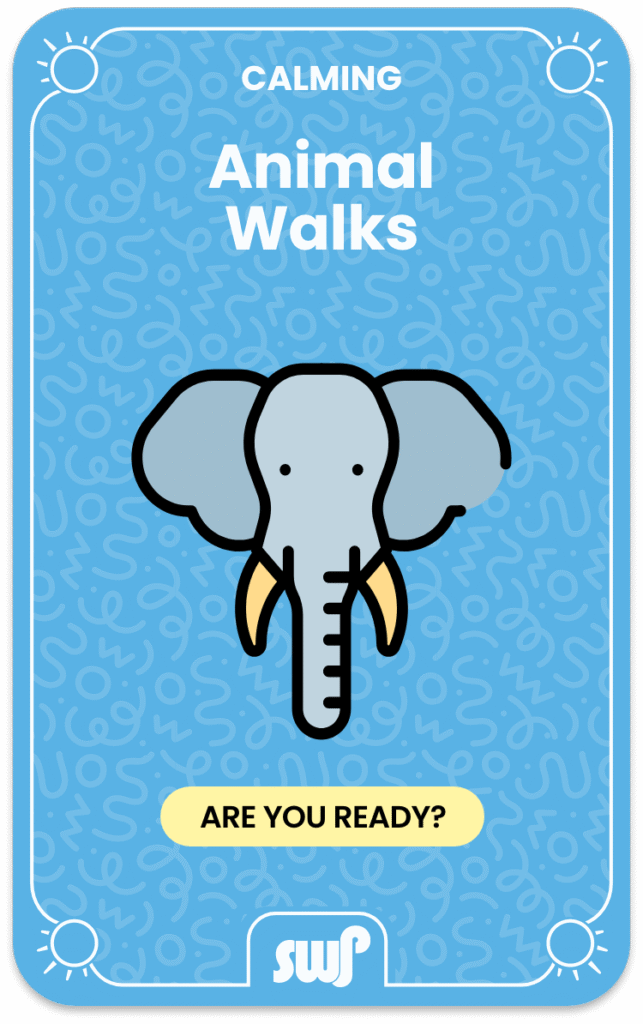
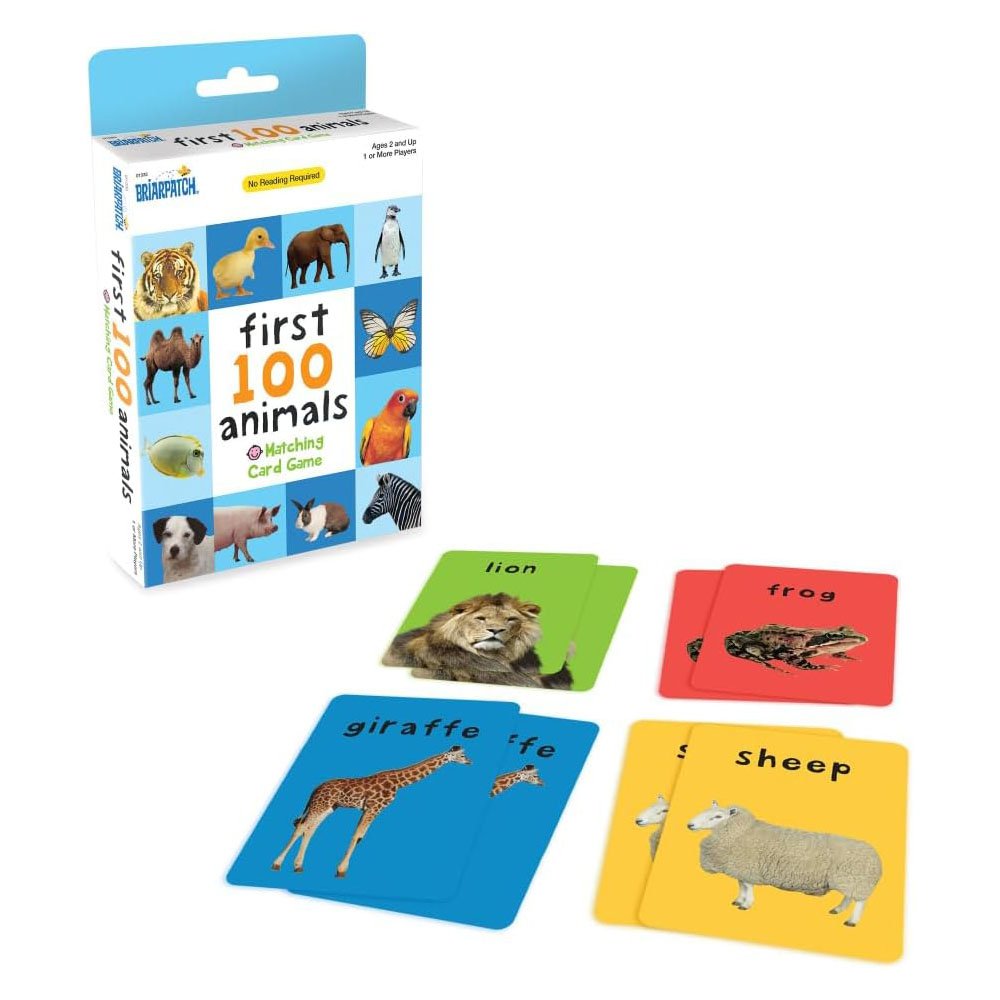
- Gather animal picture cards to show to the child.
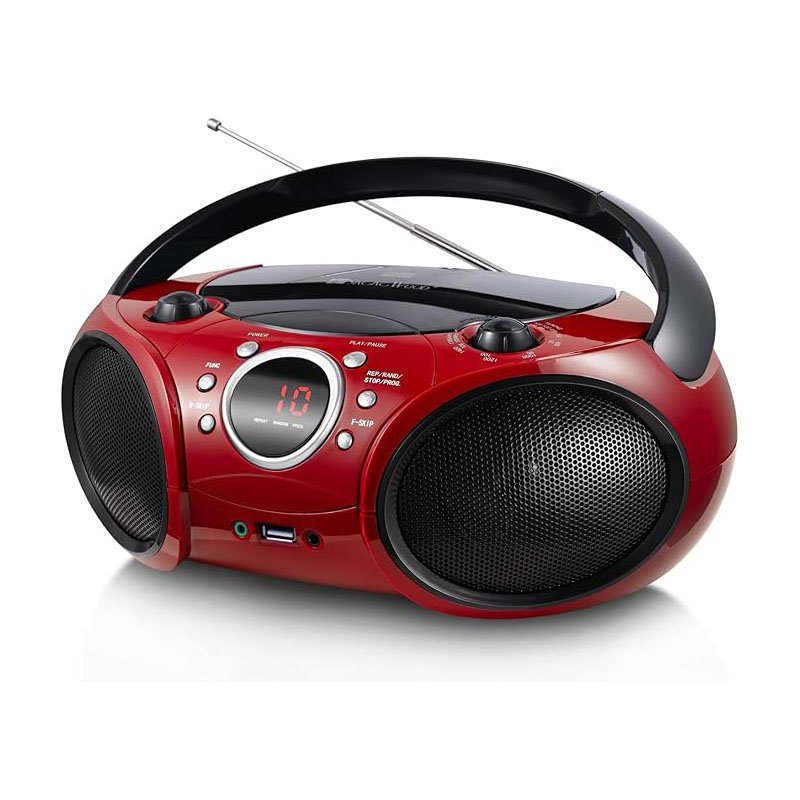
- Optionally, play soft jungle or nature music in the background to create a fun, immersive atmosphere.
2. Demonstrate Animal Movements:
- Show the child an animal picture and say the animal’s name.
- Demonstrate the animal’s movement while walking around a small circle or designated area. For example:
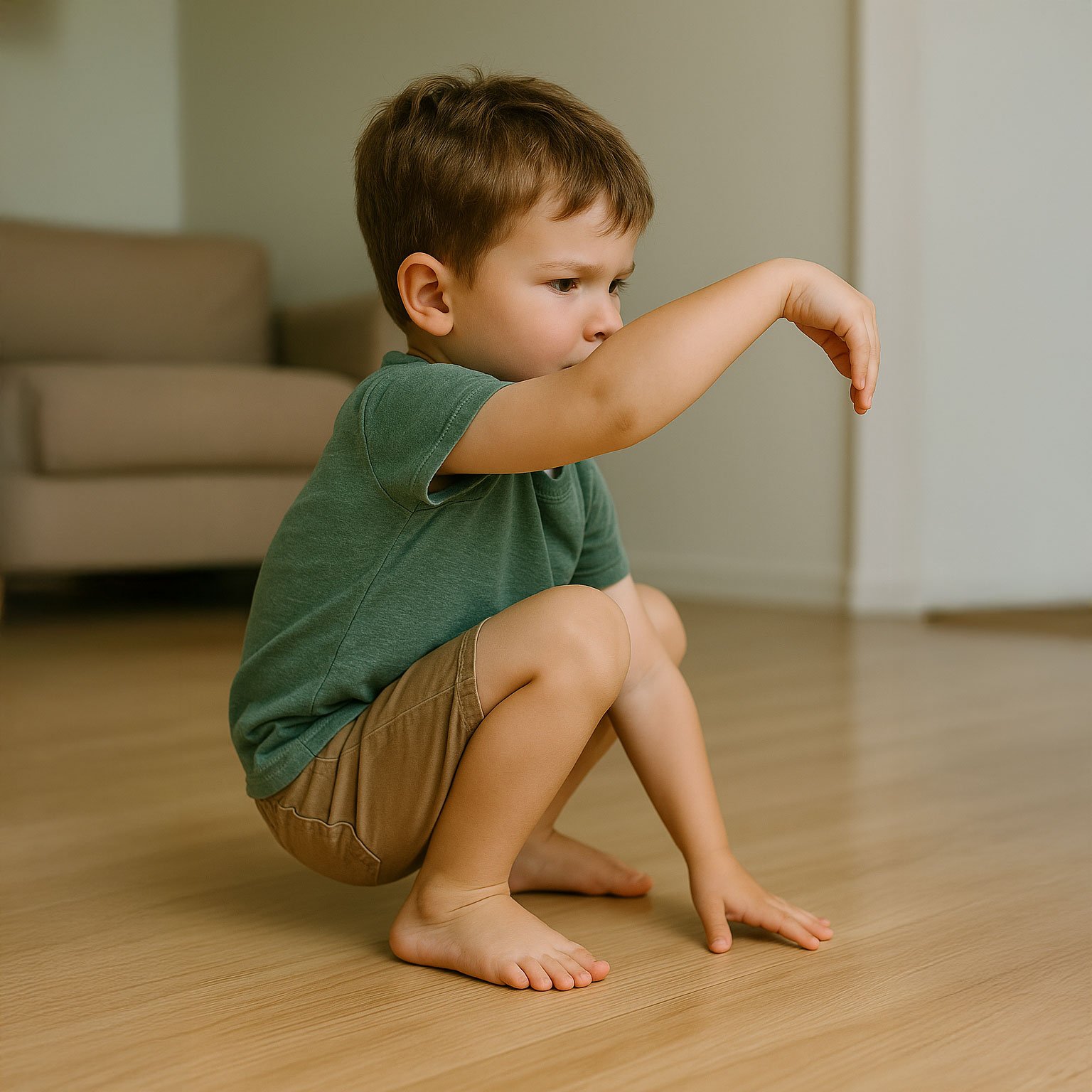
– Elephant: Walk slowly with heavy, exaggerated steps, swinging arms like an elephant’s trunk.
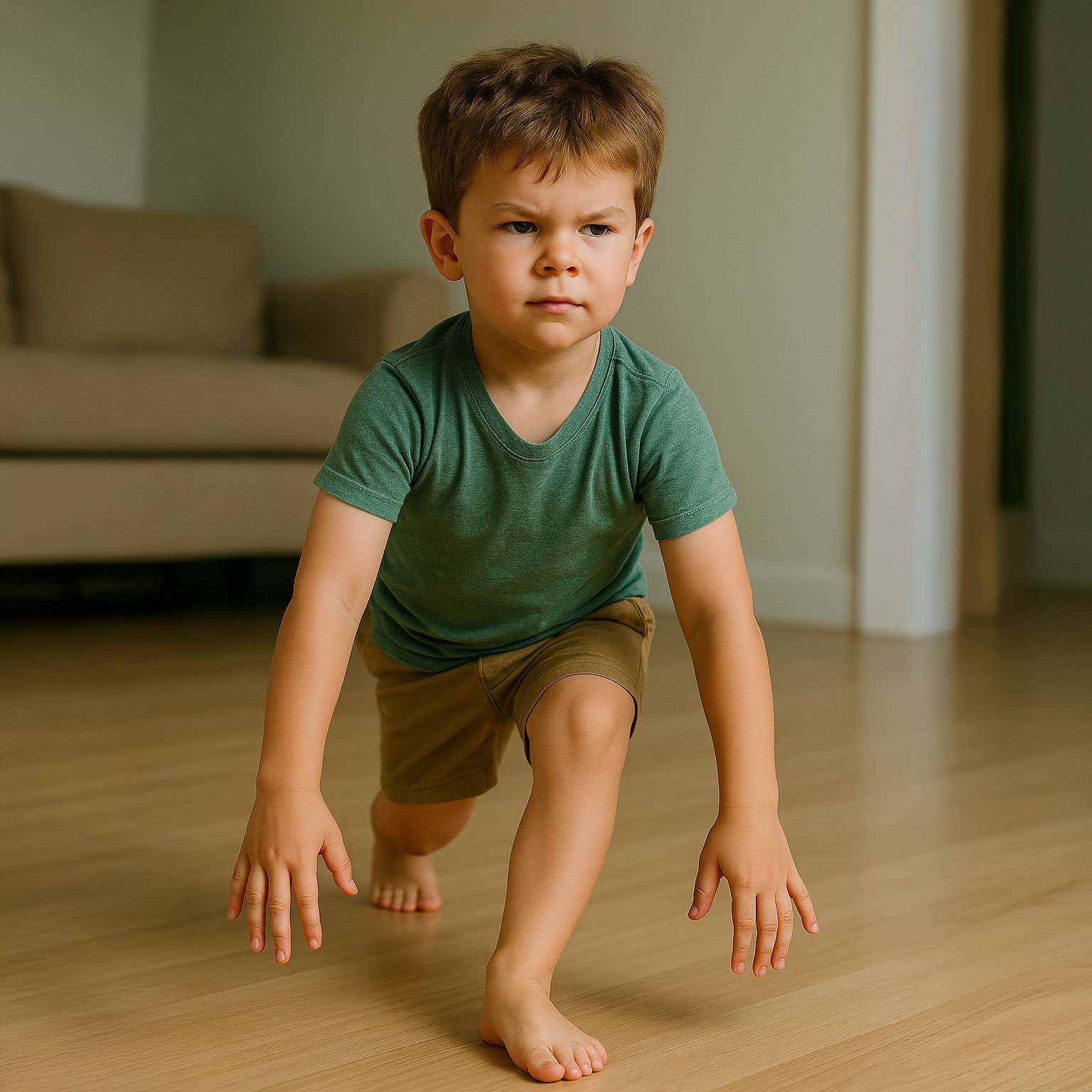
– Gorilla: Walk with bent knees, using strong, exaggerated arm movements.
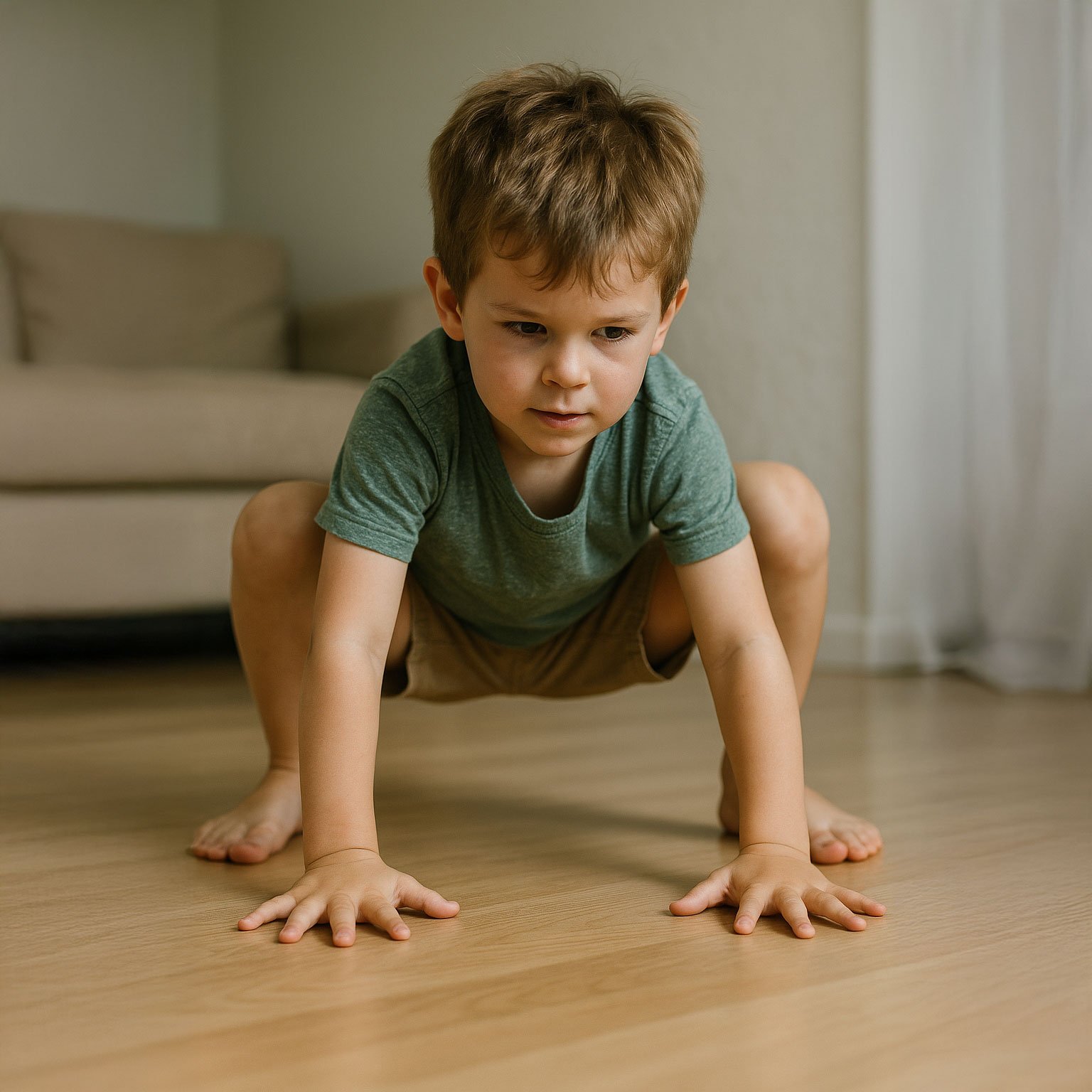
– Frog: Hop in place or around the circle, crouching down and jumping.
– Snake: Crawl on the floor, moving in a slithering motion.
– Lion: Walk with a proud, strong stride, mimicking the regal nature of a lion.
3. Take Turns:
- Take turns with the child, having them imitate the animal movements while walking around the circle.
- Encourage the child to be creative and come up with their own animal movements as well.
4. Engage and Have Fun:
- Make the activity interactive by asking the child to describe how the animal moves or sounds.
- Offer positive reinforcement for their creativity and effort.
Tips for Success:
- Adjust the difficulty and pace of the activity to suit the child’s age and abilities.
- Keep the activity fun and lighthearted, encouraging laughter and imagination.
- Be creative with the animals and movements to keep the child engaged and entertained.
Materials Needed:
- Animal picture cards
- Soft background jungle music if available
- Helper/caregiver to model animal movements